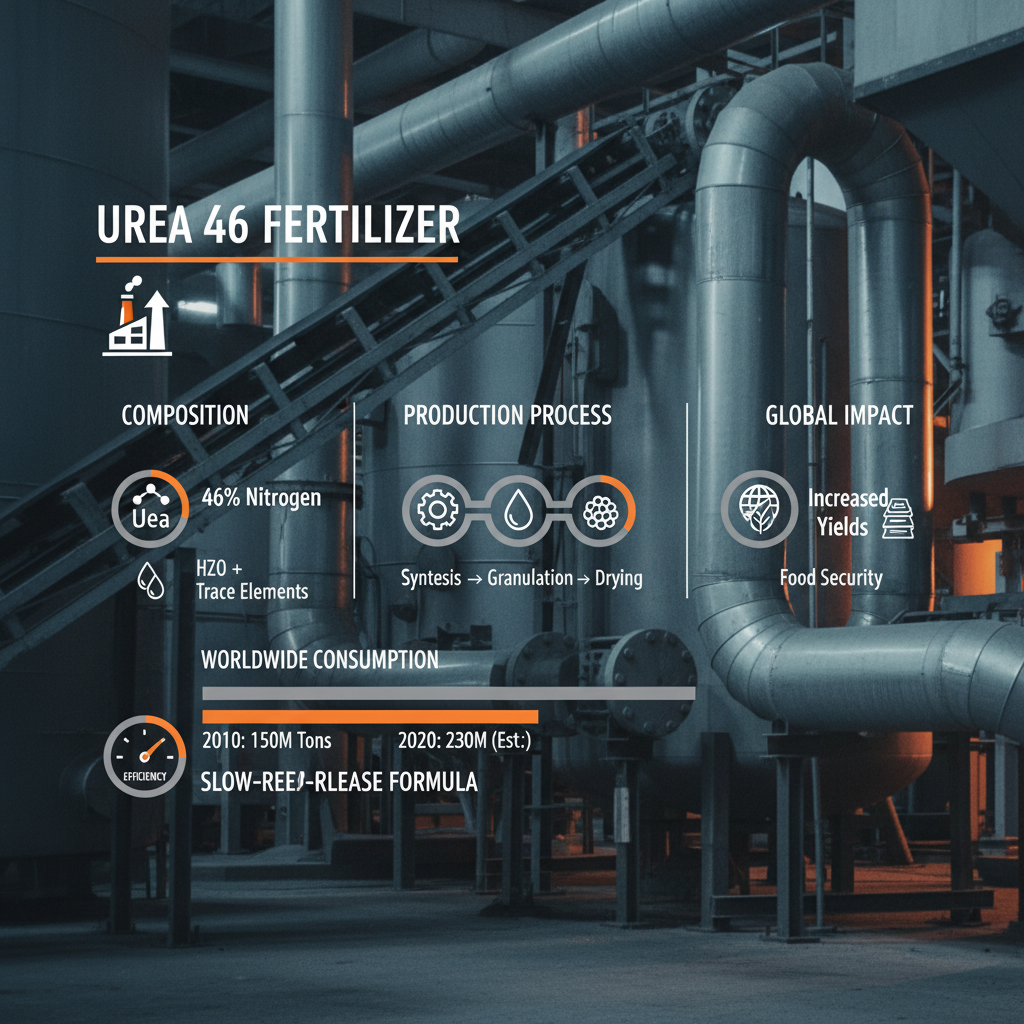
Urea 46 fertilizer, a crystalline solid comprised of 46% nitrogen, stands as a cornerstone of modern agriculture. Its high nitrogen content makes it an incredibly efficient source of this essential plant nutrient, playing a critical role in boosting crop yields worldwide. Understanding its properties, applications, and evolving technologies is paramount for ensuring global food security and promoting sustainable agricultural practices.
The global demand for urea 46 fertilizer is intrinsically linked to the growing world population and the increasing need for food production. Statistics from the Food and Agriculture Organization of the United Nations (FAO) demonstrate a consistent upward trend in nitrogen fertilizer consumption, with urea representing a significant portion of this demand. This highlights the crucial role it plays in addressing challenges related to food availability, particularly in developing nations.
However, this reliance also presents challenges. Issues such as nitrogen runoff, greenhouse gas emissions associated with production, and fluctuating fertilizer prices require innovative solutions and responsible management. A comprehensive understanding of urea 46 fertilizer is therefore vital, not just for farmers and agronomists, but also for policymakers and environmental advocates.
The Significance of Urea 46 Fertilizer
The importance of urea 46 fertilizer extends beyond simply increasing crop production; it's a critical component of global food security strategies. As arable land becomes increasingly limited, maximizing yields from existing farmland is paramount, and urea 46 fertilizer plays a vital role in achieving this goal. Its widespread adoption reflects its efficiency and relative cost-effectiveness compared to other nitrogen sources.
Moreover, urea 46 fertilizer is adaptable to various application methods, making it suitable for a wide range of farming practices, from large-scale industrial agriculture to smallholder farming in developing countries. This versatility contributes to its continued prominence in the fertilizer market and its ongoing contribution to feeding a growing global population.
Defining Urea 46 Fertilizer
Urea 46 fertilizer is a synthetic, nitrogen-rich compound chemically represented as CO(NH₂)₂. The "46" refers to the percentage of nitrogen content, making it one of the most concentrated solid nitrogen fertilizers available. It is produced through the Haber-Bosch process, which combines nitrogen from the air with hydrogen derived from natural gas, resulting in anhydrous ammonia which is then converted into urea.
Its significance lies in providing a readily available source of nitrogen, an essential macronutrient for plant growth. Nitrogen is a key component of chlorophyll, the molecule responsible for photosynthesis, and also plays a crucial role in protein synthesis and overall plant development. Without sufficient nitrogen, plants exhibit stunted growth, yellowing leaves, and reduced yields.
The ability to efficiently deliver nitrogen to plants makes urea 46 fertilizer indispensable in modern agriculture. It’s a direct input impacting not just agricultural output, but the entire food supply chain.
Core Properties of Urea 46 Fertilizer
Urea 46 fertilizer exhibits several key properties that contribute to its effectiveness. It's highly soluble in water, allowing for rapid absorption by plants. However, this solubility also means it's susceptible to leaching if not managed correctly. Its hygroscopic nature – the ability to absorb moisture from the air – requires proper storage to prevent caking and maintain its free-flowing properties.
The granular form of urea 46 fertilizer is commonly used, providing ease of handling and application. Different granule sizes are available, influencing the rate of nitrogen release and distribution. Urea also possesses a relatively high nitrogen release rate compared to some other nitrogen fertilizers, contributing to quicker plant response.
Understanding these properties is crucial for optimizing application strategies and minimizing potential losses. Proper timing, placement, and application rates are all determined by the inherent characteristics of urea 46 fertilizer.
Key Factors Influencing Urea 46 Fertilizer Effectiveness
Several factors influence how effectively urea 46 fertilizer delivers nitrogen to plants. Soil pH plays a significant role, as highly acidic or alkaline conditions can affect its stability and availability. In acidic soils, nitrification inhibitors can be used to slow down the conversion of urea to nitrate, reducing nitrogen losses.
Temperature and moisture levels also impact urea’s performance. Warm, moist soils promote rapid hydrolysis of urea, converting it to ammonia, which is then available for plant uptake. However, excessive moisture can lead to denitrification, converting nitrate into gaseous nitrogen and reducing fertilizer efficiency.
Urea 46 Fertilizer Application Method Effectiveness
Global Applications of Urea 46 Fertilizer
Urea 46 fertilizer is utilized across a vast range of agricultural systems globally. Major consuming regions include Asia (particularly China and India), North America, and South America. These regions rely heavily on urea to support the production of staple crops like rice, wheat, corn, and soybeans. In post-disaster relief operations, quick-release nitrogen from urea can be crucial for establishing emergency food supplies.
Beyond large-scale agriculture, urea 46 fertilizer is also employed in horticulture, forestry, and even turf management. Its versatility makes it suitable for a wide variety of plant types and growing conditions. In remote industrial zones where nitrogen availability is limited, it serves as a vital input for sustaining local food production.
The widespread distribution of urea 46 fertilizer necessitates efficient logistics and supply chains to ensure timely access for farmers and growers worldwide.
Advantages and Long-Term Value
The advantages of using urea 46 fertilizer are numerous. Its high nitrogen content translates to lower transportation and storage costs compared to fertilizers with lower concentrations. It’s also relatively inexpensive to produce, making it accessible to farmers with varying budgets. The quick-release nature of nitrogen promotes rapid plant growth and increased yields, enhancing productivity and profitability.
From a long-term perspective, the effective use of urea 46 fertilizer contributes to sustainable agriculture by optimizing nutrient utilization and minimizing waste. Responsible application practices, combined with precision farming technologies, can reduce environmental impact and ensure long-term soil health.
Future Trends and Innovations in Urea 46 Fertilizer
The future of urea 46 fertilizer is focused on improving efficiency, reducing environmental impact, and enhancing sustainability. Research is underway to develop slow-release and controlled-release urea formulations that minimize nitrogen losses and optimize nutrient uptake. The integration of nitrification inhibitors and urease inhibitors is becoming increasingly common.
Green ammonia production, utilizing renewable energy sources to power the Haber-Bosch process, represents a significant advancement. Digital agriculture and precision fertilization technologies, utilizing sensors and data analytics, are enabling farmers to apply urea 46 fertilizer more efficiently and responsively to plant needs.
These innovations are driven by the need to address climate change and promote a more sustainable food system, while simultaneously ensuring continued food security for a growing global population.
Challenges and Solutions
Despite its benefits, urea 46 fertilizer faces challenges including nitrogen loss through volatilization, leaching, and denitrification, impacting both economic returns and environmental health. The production process itself is energy-intensive, contributing to greenhouse gas emissions. Fluctuating natural gas prices, a key feedstock for urea production, can also impact fertilizer affordability.
Solutions lie in optimizing application techniques – split applications, incorporating urea into the soil, and using urease inhibitors to slow down ammonia volatilization. Investing in green ammonia production technologies powered by renewable energy is crucial for decarbonizing the fertilizer industry. Developing policies that incentivize sustainable fertilizer use and promote precision agriculture practices are also essential.
Summary Table of Urea 46 Fertilizer Improvement Strategies
| Challenge Area |
Solution Strategy |
Implementation Cost (1-10) |
Potential Impact (1-10) |
| Nitrogen Volatilization |
Urease Inhibitor Application |
3 |
7 |
| Nitrogen Leaching |
Split Fertilizer Application |
2 |
8 |
| High Production Emissions |
Green Ammonia Production |
9 |
10 |
| Fluctuating Feedstock Costs |
Diversification of Feedstock Sources |
6 |
6 |
| Inefficient Application |
Precision Fertilization Technologies |
7 |
9 |
| Lack of Farmer Knowledge |
Extension Services & Training |
4 |
7 |
FAQS
The optimal soil pH range for urea 46 fertilizer utilization is generally between 6.0 and 7.0. Within this range, nitrogen conversion processes are most efficient, minimizing losses due to volatilization. Outside of this range, nitrogen can become less available to plants. Soil testing is crucial to determine specific pH levels and adjust accordingly with amendments like lime or sulfur. Maintaining appropriate pH levels significantly enhances the return on investment for urea application.
Ammonia volatilization is a common concern with urea application. To minimize this loss, incorporate the urea into the soil immediately after application, ideally by tilling or irrigating. Using urease inhibitors alongside the fertilizer slows down the conversion of urea to ammonia, giving plants more time to absorb it. Avoid surface application, especially in warm weather and high wind conditions. Split applications, providing smaller doses of nitrogen over time, can also reduce volatilization losses.
Excessive or improper urea 46 fertilizer use can lead to several environmental issues. Nitrogen runoff can pollute waterways, causing eutrophication and harming aquatic ecosystems. Ammonia volatilization contributes to air pollution and acid rain. Nitrous oxide emissions, a potent greenhouse gas, are also associated with nitrogen fertilizer use. Sustainable practices like precision fertilization, nitrification inhibitors, and proper application timing are crucial to mitigate these impacts.
While urea 46 fertilizer is widely applicable, its suitability varies depending on the crop. Crops with high nitrogen demands, such as rice, wheat, and corn, generally respond well to urea. However, certain crops might benefit from different nitrogen sources or application methods. Leafy vegetables are more susceptible to burn if urea is applied directly to foliage. Soil type, climate, and other factors also influence the optimal fertilizer choice.
Granule size influences urea’s dissolution rate and distribution in the soil. Smaller granules dissolve faster, providing quicker nitrogen availability, which can be beneficial for fast-growing crops. Larger granules are less prone to dust formation and provide a more uniform distribution. Choosing the appropriate granule size depends on the specific crop, soil type, and application method. Coated urea granules can also provide controlled release.
Urea 46 fertilizer is hygroscopic, meaning it readily absorbs moisture. Therefore, it should be stored in a cool, dry, well-ventilated area, protected from rain and direct sunlight. Bags should be tightly sealed to prevent caking. Proper storage is crucial to maintain fertilizer quality and ensure its free-flowing properties for easy application. Avoid stacking bags too high to prevent damage and ensure stability.
Conclusion
Urea 46 fertilizer remains a vital component of global agricultural systems, offering a concentrated and efficient source of nitrogen for plant growth. Its widespread adoption is a testament to its effectiveness and cost-efficiency. However, responsible use is paramount, and ongoing innovation is crucial to address environmental concerns and maximize long-term sustainability. Understanding its properties, optimizing application strategies, and embracing new technologies are key to unlocking its full potential.
Looking ahead, continued research into green ammonia production, precision fertilization techniques, and enhanced fertilizer formulations will be essential for ensuring food security while minimizing environmental impact. By prioritizing sustainable practices and investing in innovative solutions, we can harness the power of urea 46 fertilizer to build a more resilient and environmentally responsible agricultural future. Visit our website to learn more about our urea 46 fertilizer products and solutions.