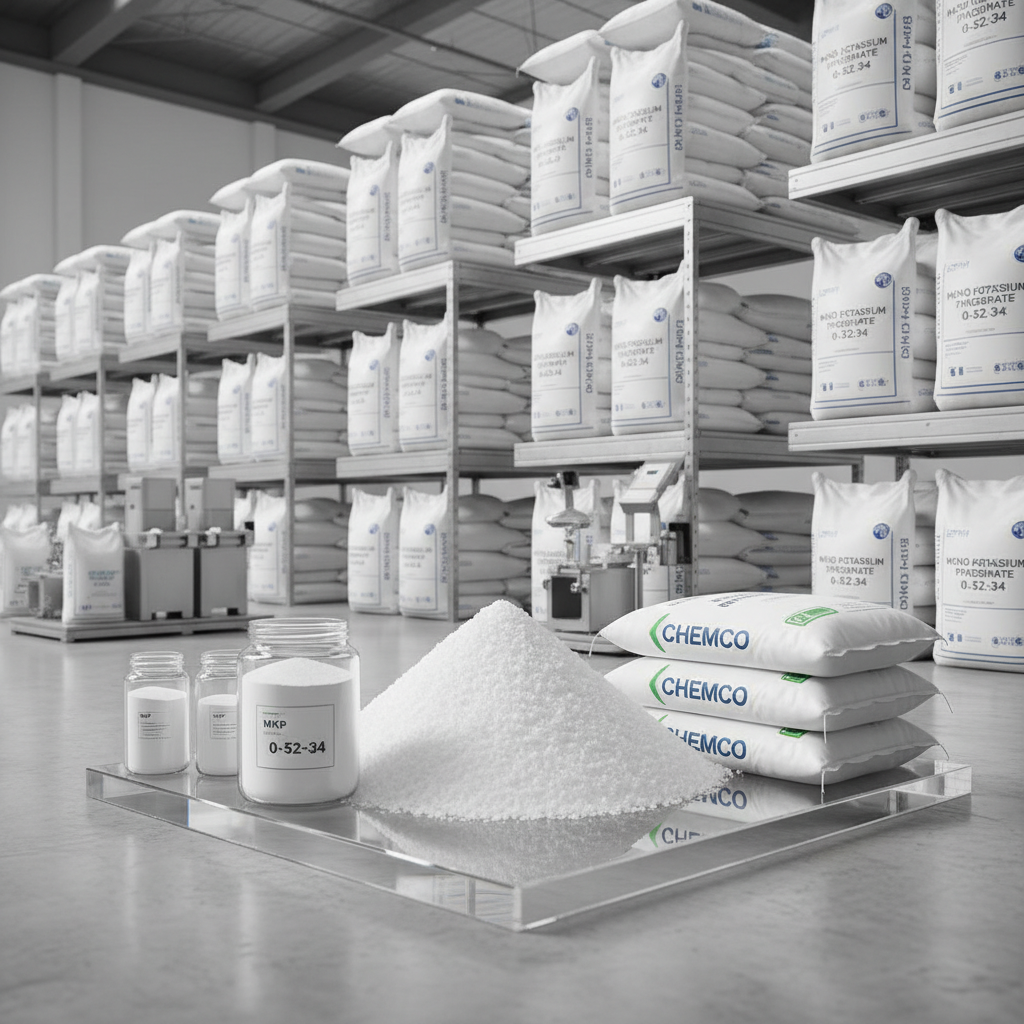
Mono potassium phosphate (MKP) is a highly soluble salt widely utilized as a source of both potassium and phosphorus in various applications, most notably in agriculture. Its importance stems from its ability to deliver these essential nutrients directly to plants, promoting healthy growth and increased yields. Globally, the demand for MKP is consistently rising due to the increasing need for efficient fertilizer solutions to support a growing population and the intensification of agricultural practices.
The global fertilizer market, as reported by the World Bank, reached approximately $240 billion in 2022, with phosphate and potash fertilizers – where MKP plays a significant role – constituting a substantial portion. This demand is particularly pronounced in regions with intensive agriculture, such as Asia-Pacific, North America, and Europe. Addressing challenges like soil degradation and nutrient depletion necessitates the use of high-quality fertilizers like mono potassium phosphate.
Understanding the properties and applications of mono potassium phosphate is crucial for optimizing crop production, improving fertilizer efficiency, and contributing to sustainable agricultural practices. Its versatility extends beyond traditional farming, influencing horticulture, hydroponics, and even industrial processes, making it a vital component in modern resource management.
Introduction to mono potassium phosphate
Mono potassium phosphate (MKP) is a staple in modern agriculture, acting as a fully water-soluble fertilizer providing both potassium and phosphorus. Its high purity and solubility make it ideal for fertigation systems – the application of fertilizers through irrigation – ensuring optimal nutrient uptake by plants. This efficient delivery minimizes waste and maximizes crop yields.
The production of mono potassium phosphate involves a controlled reaction between phosphoric acid and potassium hydroxide or potassium carbonate. Maintaining precise stoichiometric ratios during this process is crucial for achieving a high-quality product with consistent nutrient content. Its versatility extends beyond simple application, making it a key ingredient in specialized fertilizer blends tailored to specific crop needs.
Defining Mono Potassium Phosphate
Mono potassium phosphate, chemically represented as KH₂PO₄, is a white, crystalline solid that readily dissolves in water. It’s essentially a one-to-one salt of potassium and phosphoric acid. Unlike some phosphate fertilizers, MKP does not contain nitrogen, allowing for precise nutrient management without unintended nitrogen inputs.
This makes MKP particularly valuable in situations where nitrogen levels need to be carefully controlled, such as in specialty crops or during specific growth stages. Its role extends beyond simple fertilization, as it also acts as a buffering agent, helping to stabilize the pH of nutrient solutions.
In a world facing increasing pressures on food production, understanding the role of key ingredients like mono potassium phosphate is paramount. It’s a critical component in addressing the global demand for higher yields and sustainable agricultural practices, directly impacting food security.
Key Chemical and Physical Properties
Mono potassium phosphate boasts a high solubility in water – over 220g per liter at 20°C – facilitating easy application and rapid nutrient absorption by plants. Its pH in solution is slightly acidic, typically between 4.2 and 5.8, contributing to better nutrient availability in the root zone. This acidity also helps to neutralize alkaline soil conditions.
The molecular weight of MKP is approximately 136.09 g/mol. It’s non-hygroscopic, meaning it doesn’t readily absorb moisture from the air, ensuring its free-flowing properties and ease of handling. Furthermore, MKP is considered a relatively safe fertilizer, posing minimal environmental risks when used responsibly.
Its chemical stability is also noteworthy. MKP is stable under normal storage conditions and doesn’t readily decompose. This contributes to its long shelf life and reliable performance, making it a dependable choice for farmers and horticulturalists. The purity of commercially available MKP is typically high, ensuring consistent nutrient content.
Advantages in Agricultural Applications
Mono potassium phosphate offers significant advantages over other phosphate fertilizers. Its complete water solubility ensures that phosphorus and potassium are readily available for plant uptake, minimizing losses due to fixation in the soil. This direct availability translates to improved root development, enhanced flowering, and increased fruit set.
Compared to traditional phosphate rock-based fertilizers, MKP provides a more precise and efficient method of nutrient delivery. This targeted approach reduces the need for excessive fertilizer application, lowering costs and minimizing environmental impact. The ability to fertigate with MKP also allows for precise nutrient timing, matching nutrient supply with plant demand.
Comparative Effectiveness of Different MKP Application Methods
Global Applications and Industry Impact
Mono potassium phosphate finds extensive use in various agricultural sectors worldwide. In Israel, it’s a cornerstone of drip irrigation systems in arid regions, enabling efficient crop production with minimal water waste. Across Southeast Asia, particularly in rice and fruit cultivation, MKP is used to enhance yields and improve fruit quality.
The horticulture industry heavily relies on mono potassium phosphate for greenhouse crops, cut flowers, and potted plants. Its solubility and balanced nutrient profile make it ideal for providing precise nutrition to these sensitive crops. Similarly, hydroponic systems depend on MKP to deliver essential nutrients directly to plant roots in a soilless environment.
Long-Term Benefits and Sustainability
The consistent use of mono potassium phosphate contributes to long-term soil health by improving nutrient use efficiency. By providing readily available phosphorus and potassium, MKP reduces the need for excessive fertilizer applications, minimizing the risk of nutrient runoff and environmental pollution. This aligns with sustainable agricultural practices aimed at protecting water resources and maintaining soil fertility.
Economically, the increased yields resulting from MKP application translate to higher profits for farmers. Furthermore, the reduced need for corrective measures related to nutrient deficiencies lowers input costs and enhances overall farm productivity. This economic viability is crucial for ensuring food security and supporting agricultural communities.
Beyond economic benefits, MKP enhances the quality and nutritional value of crops, contributing to improved human health and well-being. The positive impact on crop quality translates into increased market value and consumer satisfaction, further solidifying the long-term benefits of using this essential fertilizer.
Future Trends and Innovations in MKP Use
Ongoing research focuses on optimizing MKP formulations for specific crop needs and soil conditions. Nano-fertilizers containing MKP are being explored to enhance nutrient uptake and reduce fertilizer rates further. Precision agriculture techniques, coupled with sensor technology, will enable even more targeted and efficient MKP application.
The integration of MKP into smart farming systems, utilizing data analytics and automation, will revolutionize fertilizer management. This will lead to reduced waste, minimized environmental impact, and maximized crop yields. Furthermore, advancements in sustainable MKP production methods, utilizing renewable energy sources, are gaining momentum.
The development of slow-release MKP formulations is also a key area of innovation. These formulations will provide a sustained release of nutrients, reducing the frequency of fertilizer applications and improving nutrient use efficiency. This aligns with the growing demand for environmentally friendly and sustainable agricultural solutions.
Analysis of Factors Influencing Mono Potassium Phosphate Market Dynamics
| Geographic Region |
Crop Type |
Application Method |
Market Growth Rate (2024-2030) |
| North America |
Corn |
Fertigation |
4.5% |
| Asia-Pacific |
Rice |
Soil Application |
6.2% |
| Europe |
Fruits & Vegetables |
Foliar Spray |
3.8% |
| Latin America |
Soybeans |
Seed Coating |
5.1% |
| Africa |
Cocoa |
Drip Irrigation |
7.0% |
| Middle East |
Dates |
Hydroponics |
5.5% |
FAQS
The ideal pH range for utilizing mono potassium phosphate in hydroponic systems typically falls between 5.5 and 6.5. Within this range, both potassium and phosphorus are optimally available for plant uptake. Maintaining a stable pH is crucial, as deviations can lead to nutrient lock-out and reduced growth. Regular monitoring and adjustment with pH-up or pH-down solutions are recommended to ensure optimal nutrient absorption and prevent precipitation of essential elements.
Yes, mono potassium phosphate is generally compatible with most other water-soluble fertilizers. However, it's crucial to avoid mixing it with fertilizers containing calcium or magnesium, as this can lead to the formation of insoluble precipitates, reducing nutrient availability. Always prepare a small test batch before mixing large quantities to ensure compatibility. It's best to add MKP as a separate stock solution to prevent any potential reactions with other nutrients, especially if you are using hard water sources.
Mono potassium phosphate should be stored in a cool, dry, and well-ventilated area, away from direct sunlight and moisture. The ideal storage temperature is between 10°C and 30°C. Ensure the packaging is tightly sealed to prevent moisture absorption, which can lead to caking. It’s also recommended to store MKP on pallets to avoid contact with the floor and improve air circulation, thus preserving its quality and preventing degradation over time.
Mono potassium phosphate (MKP) and mono ammonium phosphate (MAP) both provide phosphorus but differ significantly in their potassium and nitrogen content. MKP contains potassium but no nitrogen, making it ideal for situations where nitrogen levels need to be carefully controlled. MAP, conversely, contains nitrogen alongside phosphorus. This means MAP is a more complete fertilizer but requires cautious use to avoid over-application of nitrogen. MKP is preferred for fertigation and foliar applications due to its high solubility, while MAP is often used as a starter fertilizer.
Mono potassium phosphate is relatively environmentally friendly when used responsibly. Its high solubility reduces the risk of phosphorus runoff compared to some other phosphate fertilizers. However, excessive application can still contribute to eutrophication in water bodies. To minimize environmental impact, apply MKP based on plant needs and soil test results, utilize precision irrigation techniques, and avoid application before heavy rainfall. Proper storage and handling also prevent spills and contamination of waterways.
Recommended dosages of mono potassium phosphate vary significantly depending on the plant type, growth stage, and growing medium. Generally, for hydroponics, a concentration of 100-200 ppm (parts per million) of phosphorus and potassium combined is a good starting point. For foliar applications, a lower concentration of 50-100 ppm is recommended. Always consult specific crop guidelines and conduct small-scale tests to determine the optimal dosage for your specific plants and conditions. Over-application can lead to nutrient imbalances and toxicity.
Conclusion
Mono potassium phosphate stands as a critical component in modern agriculture, offering a highly soluble and efficient source of phosphorus and potassium. Its versatility, ranging from fertigation to foliar applications, addresses a broad spectrum of crop nutritional needs, leading to enhanced yields and improved crop quality. The environmental benefits, when used responsibly, further solidify its importance in sustainable agricultural practices.
Looking ahead, continued innovation in MKP formulations and application techniques will drive even greater efficiency and sustainability. Integrating MKP into smart farming systems, coupled with advancements in nano-fertilizer technology, holds the potential to revolutionize fertilizer management and contribute to global food security. Visit our website at mono potassium phosphate to learn more about our high-quality MKP products and solutions.